Review draft, not for circulation. Names, numbers and photo credits are still to be confirmed.
From 18 to 22 December 2025, the Bangalore Astronomical Society (BAS) held the first star party of its 2025-26 season. The site was near Talakaveri, above Bhagamandala, in Kodagu (Coorg). The five nights were around the new moon of Saturday, 20 December. Saturday and Sunday were public nights.
What Is a Star Party
A star party is a gathering of amateur astronomers at a dark site. People bring their telescopes and binoculars, and they observe from dusk to dawn. Newcomers do not need a telescope of their own. They look through the telescopes of others, and the owners explain what is in view.
Most of the targets are deep-sky objects. A deep-sky object is anything outside our Solar System: a star cluster, a nebula or a galaxy. These objects are faint, so a dark sky and a large telescope help.
BAS brings its own 16-inch Dobsonian telescope for the public. A Dobsonian is a reflecting telescope on a simple, low mount that the observer moves by hand. The 16 inches is the diameter of its main mirror. A larger mirror collects more light and shows fainter objects.
At each star party, the first nights are for experienced members, who work on their own observing and imaging programmes. The weekend nights are public nights for everyone.
The Site and the Moon
The Bortle scale rates the darkness of a night sky from 1 to 9. Class 1 is the darkest sky on Earth. Class 9 is an inner-city sky, like that of Bengaluru.
The BAS site in Coorg is about 300 km from Bengaluru. Its sky is Bortle class 2 to 3. A light dome is the glow of town lights above the horizon. The only large light dome at the site comes from Bhagamandala. From this site, the Milky Way is a clear band across the sky.
The Moon is the brightest object in the night sky. Its light washes out faint galaxies and nebulae. So BAS holds each star party in the dark nights around a new moon. The season runs from December to March, the period of clear skies over Coorg.
Activities and Observing
The star party had activities as well as observing. Suresh C gave an introduction to astronomy equipment. Krishna Kiran Gorti led a sky tour. On a sky tour, a guide points out constellations and bright stars, and tells the stories behind them.
Participants also played constellation games, such as a scramble of constellation names. A cosmic scavenger hunt gave them a list of objects to find. The list was a web page that works offline on a phone. It puts the objects in the order they are best seen, from twilight to 4 am. Participants tick each object they see and collect points. The page has a red theme for use in the dark.
Dark adaptation is the slow change that lets the eye see faint objects. It takes about 30 minutes, and one bright light can undo it. This is why observers use only dim red light at night.
Astronomical twilight ends when the Sun is 18 degrees below the horizon. On these dates it ended at 19:22. Astronomical dawn was at 05:26. Between these times, people observed through the night. At the public telescopes, volunteers found the objects and let each visitor take a turn.
What People Saw
The sky was not perfect. Transparency is the clearness of the air, and it decides how faint an object you can see. Poor transparency affected some of the first nights. The sky cleared on the night of 21 December, and it stayed clear through the night of 22 December.
On the public nights, visitors looked at planets, multiple stars and galaxies. Jupiter was up all night. Saturn set at about midnight. That month, its rings were almost edge-on to the Earth.
Experienced members went after faint targets. Many targets have catalogue numbers. An M number comes from Charles Messier’s catalogue of bright deep-sky objects. An NGC number comes from the New General Catalogue, a larger list. Highlights from the members’ reports include:
- the Grus Quartet, four galaxies in the southern constellation Grus, all seen on 21 December;
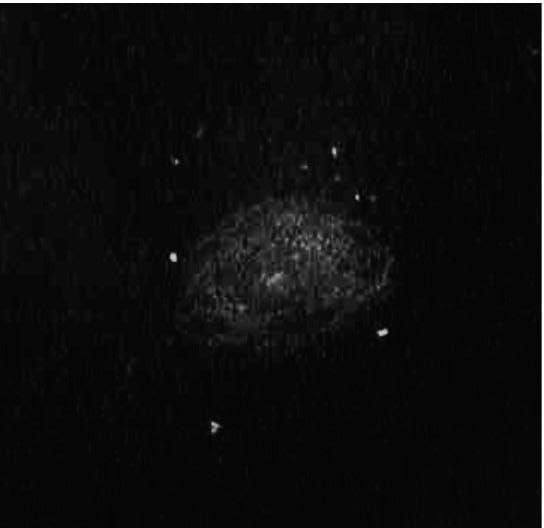
- NGC 604, a giant cloud of glowing gas inside the Triangulum Galaxy, M33, found after a participant asked to see M33;
- NGC 1999, a small nebula in Orion with a dark hole near its centre;
- Ceres, the dwarf planet in the asteroid belt;
- six galaxies in the Dorado group, low in the southern sky;
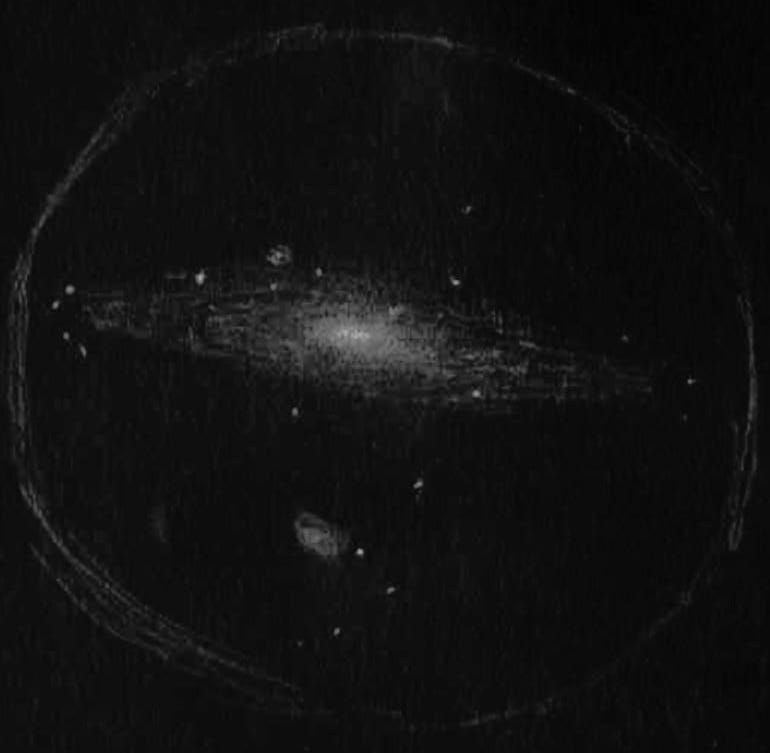
- the Andromeda Galaxy, M31, in binoculars;
- three-dimensional views through a 5-inch binocular telescope, which is two telescopes side by side, one for each eye.
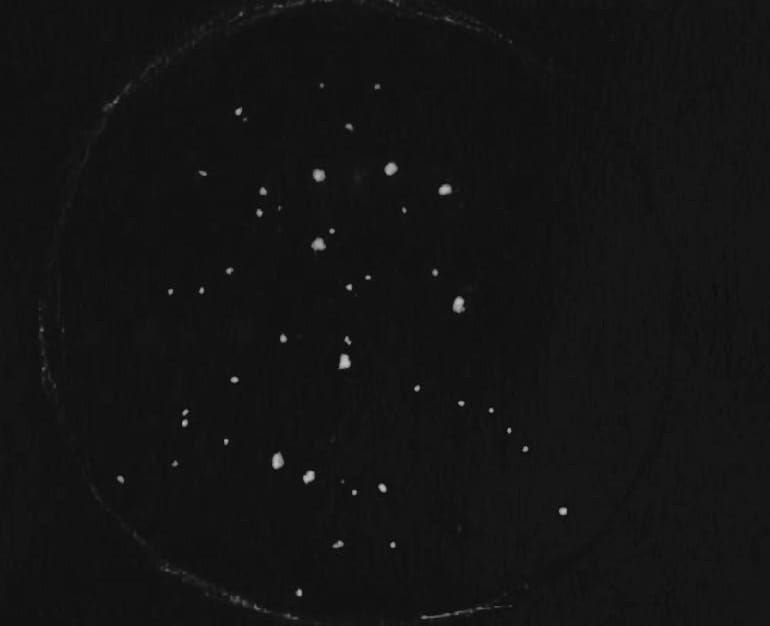
One volunteer saw 50 objects that were new to him. Another sketched M33, M31 and the Pleiades through 15×70 binoculars on 22 December. These binoculars magnify 15 times, and each front lens is 70 mm across. Binoculars give a wide field of view. A large, faint galaxy such as M33 shows well in them.
Behind the Scenes
Members bring their own telescopes to Coorg by car. One member takes out the main mirror and carries it in a padded suitcase. On the public nights, volunteers show objects through their own telescopes, and members run the BAS 16-inch telescope. Members also share their instruments with each other and compare their views.
The BAS Star-Party Season
BAS usually holds four star parties each season, one a month from December to March, at the time of the new moon.
BAS has held star parties in Coorg for many winters. In December 2023, cloud covered four nights. The last night was clear, and one observer counted more than 400 meteors of the Geminid shower. A meteor is the streak of light from a grain of space dust that burns up in the air. In a meteor shower, many meteors appear on the same nights each year. The Geminid shower reaches its peak in mid-December.
How to Join the Next Star Party
BAS announces pre-registration for each star party on the BAS Telegram group, about two to three weeks before the event. Places depend on the number of beds.
You do not need a telescope or any experience. Bring warm clothes for a cold night and a red torch. The next season is planned to start in December 2026.
To follow BAS, join the BAS Telegram group or the BAS Google group, and watch the BAS YouTube channel. BAS pins event announcements on the Telegram group. The BAS website is bas.org.in.